
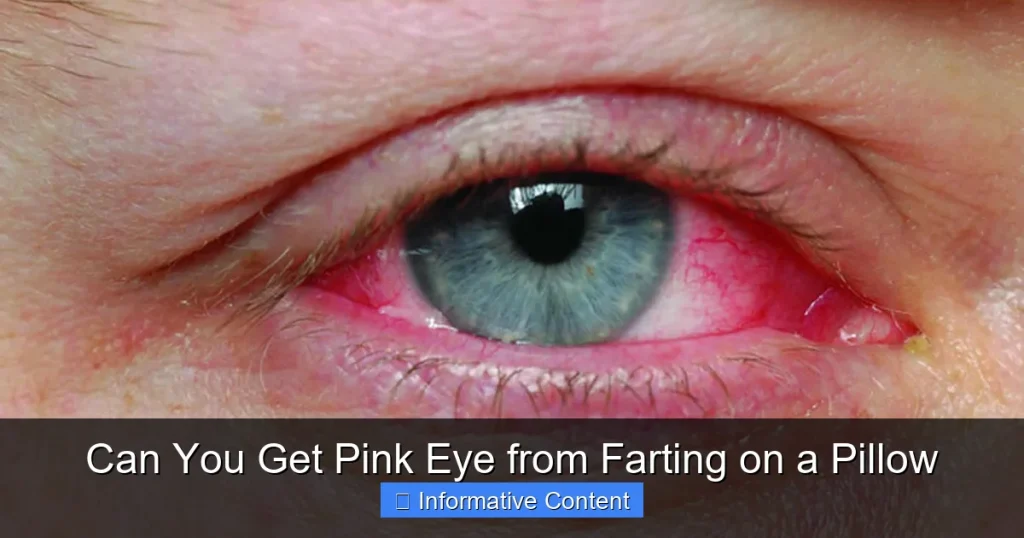
Can you get pink eye from farting on a pillow? The short answer is no — flatulence does not contain the bacteria or viruses that cause conjunctivitis. However, your pillow can still harbor germs that lead to infections if not cleaned regularly. This article breaks down the science, debunks the myth, and shares practical hygiene tips to protect your eye health.
- Pink eye is caused by viruses, bacteria, or allergens — not flatulence. The gases released during farting do not carry the pathogens responsible for conjunctivitis.
- Your pillow can be a breeding ground for germs. Dead skin cells, sweat, oils, and saliva accumulate on pillowcases, creating an environment where bacteria and viruses thrive.
- Viral and bacterial pink eye spread through direct contact. Touching contaminated surfaces and then rubbing your eyes is the most common transmission route.
- Regular pillow hygiene matters more than you think. Washing pillowcases weekly and replacing pillows periodically significantly reduces your risk of infections.
- Allergic conjunctivitis is triggered by allergens, not infections. Dust mites, pet dander, and pollen on pillows can cause eye irritation that mimics pink eye.
- Good hand hygiene is your best defense. Washing your hands frequently and avoiding touching your face are the most effective ways to prevent pink eye.
- The farting-on-a-pillow myth is just that — a myth. While it makes for a funny story, there is no scientific evidence supporting this as a cause of conjunctivitis.
Quick Answers to Common Questions
Can you get pink eye from farting on a pillow?
No. Flatulence does not contain the viruses, bacteria, or allergens that cause pink eye. This is a myth with no scientific basis.
What actually causes pink eye?
Pink eye is caused by viral infections (like the common cold), bacterial infections, or allergens such as pollen, dust mites, and pet dander.
How long can pink eye germs survive on a pillow?
Viral and bacterial pathogens can survive on fabric surfaces like pillowcases for several hours to a few days, depending on the specific organism and environmental conditions.
How often should I wash my pillowcase to prevent infections?
You should wash your pillowcase at least once a week in hot water. If someone in your household has an active infection, change it daily.
Can dust mites on pillows cause eye problems?
Yes. Dust mites and their waste products are common allergens that can trigger allergic conjunctivitis, causing redness, itching, and watery eyes.
📑 Table of Contents
Can You Really Get Pink Eye from Farting on a Pillow?
If you’ve ever stumbled across the question “can you get pink eye from farting on a pillow,” you’re not alone. This bizarre myth has circulated on the internet for years, sparking curiosity and more than a few laughs. But behind the humor lies a genuine question about hygiene, germs, and how infections actually spread. Let’s dig into the science and separate fact from fiction once and for all.
The short and simple answer is no. You cannot get pink eye from farting on a pillow. Flatulence is primarily composed of nitrogen, hydrogen, carbon dioxide, methane, and small amounts of sulfur-containing compounds. None of these gases carry the viruses, bacteria, or allergens that cause conjunctivitis — the medical term for pink eye. So while the idea might make for a hilarious conversation starter, it has no basis in medical science.
That said, your pillow can harbor plenty of germs that are capable of causing infections, including pink eye. Understanding how conjunctivitis actually spreads is key to protecting yourself and your family.
What Actually Causes Pink Eye?
The Three Main Types of Conjunctivitis
Pink eye isn’t a single condition — it’s a symptom with multiple causes. The three primary types are viral, bacterial, and allergic conjunctivitis. Each has a different trigger, but they all result in the same telltale redness, itching, and discharge in the eyes.
- Viral conjunctivitis is the most common type. It’s usually caused by the same viruses responsible for the common cold, particularly adenoviruses. This form is highly contagious and can spread rapidly through households, schools, and workplaces.
- Bacterial conjunctivitis is caused by bacteria such as Staphylococcus aureus, Streptococcus pneumoniae, and Haemophilus influenzae. It often produces a thick, yellow-green discharge and can affect one or both eyes.
- Allergic conjunctivitis occurs when your eyes react to allergens like pollen, dust mites, pet dander, or mold. This type is not contagious but can be incredibly uncomfortable.
How Pink Eye Actually Spreads
Viral and bacterial pink eye spread through direct or indirect contact with the eye secretions of an infected person. This can happen when you touch a contaminated surface — like a pillowcase, towel, or doorknob — and then touch your eyes. Sharing personal items, such as makeup or pillows, is another common transmission route. This is why maintaining clean bedding is so important for overall health.
Why Your Pillow Could Be a Problem
The Hidden World of Pillow Germs
Your pillow is one of the dirtiest items in your home, and most people have no idea. Every night, your pillow absorbs sweat, saliva, dead skin cells, body oils, and even residual makeup. Over time, this creates a warm, moist environment that’s perfect for bacteria, fungi, and dust mites to flourish.
Studies have shown that a pillow that hasn’t been washed or replaced in over two years can contain millions of fungal spores. Add to that the bacteria from your mouth and nose that transfer while you sleep, and you’ve got a microbial playground right under your head.
Can Pillow Germs Cause Pink Eye?
While your pillow won’t give you pink eye from flatulence, it can contribute to the spread of conjunctivitis in other ways. If someone with viral or bacterial pink eye uses a pillow, the pathogens can survive on the fabric for hours or even days. The next person who uses that pillow — or even touches it and then rubs their eyes — could become infected.
This is especially relevant in shared sleeping environments, such as family homes, dormitories, and hotels. Using a pillow protector can add an extra barrier between you and the germs lurking inside your pillow.
How to Keep Your Pillow Clean and Germ-Free
Wash Your Pillowcases Regularly
The single most effective thing you can do is wash your pillowcases at least once a week in hot water. Hot water kills bacteria and dust mites more effectively than cold or warm water. If you or someone in your household has an active eye infection, consider changing the pillowcase daily until the infection clears.
Clean the Pillow Itself
Many people forget that the pillow itself needs cleaning, not just the case. Most synthetic and down-alternative pillows can be machine washed. If you’re wondering whether you can put pillows in the dryer on high heat, the answer depends on the material — but many pillows can be tumble-dried on low to medium heat to freshen them up and kill dust mites.
Replace Your Pillows on Schedule
Even with regular washing, pillows should be replaced every one to two years. Over time, pillows lose their shape and accumulate allergens and microorganisms that washing can’t fully eliminate. If you wake up with congestion, itchy eyes, or skin irritation, it might be time for a new pillow.
Preventing Pink Eye: Practical Tips
Hand Hygiene Is Everything
The number one way to prevent pink eye is to wash your hands frequently with soap and water for at least 20 seconds. Avoid touching your eyes, nose, and mouth with unwashed hands. This simple habit is more effective than any other preventive measure.
Don’t Share Personal Items
Never share pillows, towels, washcloths, eye makeup, or contact lens cases. These items can easily transfer infectious agents from one person to another. In households where someone has pink eye, keep their personal items separate and wash them in hot water.
Manage Allergens in Your Bedroom
If you suffer from allergic conjunctivitis, reducing allergens in your sleeping environment can make a big difference. Use hypoallergenic pillowcases, wash bedding weekly, and consider using an air purifier. Keeping pets off the bed and vacuuming regularly also helps reduce dust mites and pet dander.
The Bottom Line on Pink Eye and Pillows
So, can you get pink eye from farting on a pillow? Absolutely not. The gases in flatulence do not contain the pathogens that cause conjunctivitis. This myth is purely internet folklore with no scientific backing.
However, your pillow can harbor the bacteria, viruses, and allergens that do cause pink eye. Practicing good pillow hygiene — washing pillowcases weekly, cleaning pillows regularly, and replacing them on schedule — is a smart move for your overall health. Combine that with proper handwashing and avoiding shared personal items, and you’ll significantly reduce your risk of pink eye and other infections.
Your pillow should be a place of comfort, not a source of germs. Take a few minutes this week to check the state of your bedding — your eyes will thank you.
Frequently Asked Questions
Is pink eye contagious?
Viral and bacterial pink eye are highly contagious and can spread through direct contact with infected eye secretions or contaminated surfaces. Allergic conjunctivitis is not contagious.
Can I get pink eye from my own pillow?
Yes, if you’ve already had pink eye, reusing the same pillowcase without washing it can reinfect you. Always wash bedding thoroughly after an infection.
What are the first symptoms of pink eye?
Early symptoms include redness in one or both eyes, itching or burning sensation, watery or thick discharge, and crusting of the eyelids or lashes, especially in the morning.
How can I tell if my pink eye is viral or bacterial?
Viral pink eye usually produces a watery discharge and often accompanies a cold. Bacterial pink eye typically causes a thick, yellow-green discharge. A doctor can confirm the type through examination.
Do pillow protectors help prevent pink eye?
Pillow protectors add a barrier against dust mites, allergens, and bacteria, which can help reduce the risk of allergic conjunctivitis and limit the spread of infectious agents on your pillow.
When should I see a doctor for pink eye?
See a doctor if you experience severe pain, sensitivity to light, blurred vision, intense redness, or if symptoms don’t improve after a few days. Newborns with pink eye symptoms should see a doctor immediately.