
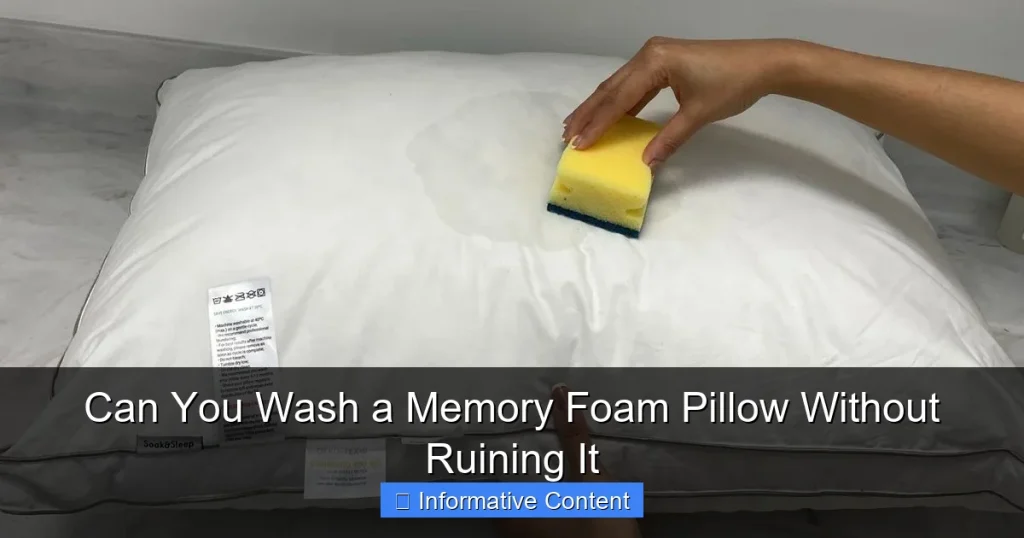
Yes, you can wash a memory foam pillow — but not the way you’d wash a regular pillow. Submerging it in water or tossing it in the washing machine can destroy its structure. Instead, spot cleaning and proper air drying are the safest methods. With the right care, your memory foam pillow can last years while staying clean, supportive, and odor-free.
Key Takeaways
- Never machine wash memory foam: The agitation and soaking break down the foam’s cellular structure, causing it to crumble and lose support.
- Spot cleaning is the safest method: Use a mild detergent and damp cloth to target stains without saturating the foam.
- Always air dry — never use a dryer: High heat melts and warps memory foam. Let it dry naturally in a well-ventilated area.
- Use a pillow protector to reduce washing needs: A quality protector blocks sweat, oils, and allergens from reaching the foam.
- Baking soda is your best friend: Sprinkle it on the pillow to absorb odors, then vacuum it off after 30 minutes.
- Deep clean only when necessary: Over-washing memory foam shortens its lifespan. Stick to surface cleaning for routine care.
- Check the manufacturer’s label: Some memory foam pillows come with specific cleaning instructions that override general advice.
Quick Answers to Common Questions
Can you put a memory foam pillow in the washing machine?
No. The agitation and soaking will destroy the foam’s internal structure, causing it to crumble and lose its shape permanently.
Can you put a memory foam pillow in the dryer?
Never. High heat warps, shrinks, or melts memory foam. Always air dry your pillow in a well-ventilated area instead.
How do you remove odors from a memory foam pillow?
Sprinkle baking soda over the entire pillow surface, let it sit for 30 minutes to an hour, then vacuum it off thoroughly. Repeat on the other side.
How long does a memory foam pillow take to dry after cleaning?
It typically takes 24 to 48 hours to air dry completely. Make sure it’s fully dry before using it again to prevent mold growth.
How often should you clean a memory foam pillow?
Change the pillowcase weekly, deodorize monthly with baking soda, and spot clean stains every 3 to 6 months as needed.
📑 Table of Contents
- Can You Wash a Memory Foam Pillow Without Ruining It?
- Why You Should Never Machine Wash Memory Foam
- How to Spot Clean a Memory Foam Pillow
- How to Deodorize Your Memory Foam Pillow
- How to Dry a Memory Foam Pillow Properly
- How Often Should You Clean Your Memory Foam Pillow?
- Common Mistakes to Avoid When Cleaning Memory Foam
- When It’s Time to Replace Your Memory Foam Pillow
- Final Thoughts
Can You Wash a Memory Foam Pillow Without Ruining It?
You love your memory foam pillow. It cradles your head perfectly, eases your neck pain, and gives you the best sleep of your life. But after months of use, it’s starting to smell a little off. Maybe there’s a stain from last week’s late-night snack. So you wonder — can you just toss it in the washing machine?
Here’s the short answer: you can clean a memory foam pillow, but you absolutely should not wash it like a regular pillow. Memory foam is a sensitive material. It reacts poorly to excessive water, heat, and agitation. One wrong move and you’ll end up with a lumpy, misshapen pillow that offers zero support.
The good news? Cleaning your memory foam pillow the right way is simple, quick, and effective. Let’s walk through everything you need to know to keep your pillow fresh without destroying it.
Why You Should Never Machine Wash Memory Foam
The Science Behind the Sensitivity
Memory foam — also known as viscoelastic polyurethane foam — is made up of millions of tiny open cells. These cells respond to heat and pressure, which is why the foam molds to your head and neck so beautifully. But those same cells act like sponges. When you submerge memory foam in water, it absorbs moisture deep into its core and becomes extremely difficult to dry completely.
Trapped moisture creates a breeding ground for mold and mildew. That’s the last thing you want resting under your face for eight hours a night.
What Happens in the Washing Machine
A washing machine agitates, spins, and soaks your laundry. For cotton or polyester pillows, that’s fine. For memory foam, it’s a disaster. The tumbling action tears apart the foam’s internal structure, causing it to crumble, chunk, and lose its shape permanently. Even a gentle cycle can do irreversible damage.
If you’re curious about how other pillow types handle machine washing, check out our guide on how to wash pillows in a washing machine — but remember, memory foam is a completely different story.
How to Spot Clean a Memory Foam Pillow
What You’ll Need
Spot cleaning is the gold standard for memory foam pillow care. Here’s your simple supply list:
- Mild liquid detergent (fragrance-free is best)
- Cool or lukewarm water
- A clean white cloth or sponge
- A spray bottle (optional)
- A vacuum with an upholstery attachment
Step-by-Step Spot Cleaning Process
Step 1: Remove the pillowcase and any removable cover. If your pillow has a pillow protector, take that off too and wash it separately according to its label.
Step 2: Mix a small amount of mild detergent with cool water. You want a lightly soapy solution — not a bubble bath.
Step 3: Dip your cloth into the solution and wring it out thoroughly. The cloth should be damp, not dripping. Gently blot the stained area. Never scrub memory foam — rubbing pushes moisture deeper and can tear the foam.
Step 4: Use a second cloth dampened with plain water to rinse the area. Again, blot — don’t soak.
Step 5: Press a dry towel against the cleaned area to absorb as much moisture as possible.
How to Deodorize Your Memory Foam Pillow
The Baking Soda Method
Odors are the most common reason people want to wash their memory foam pillows. Sweat, skin oils, and dust mites all contribute to that musty smell over time. Baking soda is a natural deodorizer that works wonders without any moisture.
Here’s how to do it:
- Sprinkle a generous layer of baking soda over the entire surface of the pillow.
- Let it sit for at least 30 minutes — an hour is even better.
- Use your vacuum’s upholstery attachment to suck up all the baking soda.
- Flip the pillow and repeat on the other side.
This method pulls odors right out of the foam. Do this once a month and your pillow will stay noticeably fresher between deeper cleanings.
Sunlight as a Natural Sanitizer
If the weather cooperates, placing your memory foam pillow in indirect sunlight for a couple of hours can help kill bacteria and eliminate odors. Direct, intense sunlight for prolonged periods can degrade the foam, so aim for a bright but shaded outdoor spot or a sunny windowsill with a sheer curtain.
How to Dry a Memory Foam Pillow Properly
Air Drying Is the Only Safe Option
After spot cleaning, your pillow needs to dry completely before you use it again. Never put a memory foam pillow in the dryer. The heat will warp, shrink, or even melt the foam. Even on a no-heat air fluff setting, the tumbling can damage the structure.
Instead, lay the pillow flat on a clean, dry towel in a well-ventilated room. A fan pointed nearby can speed up the process. Flip the pillow every few hours to ensure even drying. Depending on humidity and airflow, it can take 24 to 48 hours for a memory foam pillow to dry completely.
How to Know It’s Fully Dry
Press your hand firmly into the pillow. If it feels cool or damp anywhere inside, it needs more time. Using a memory foam pillow while it’s still wet invites mold growth and defeats the purpose of cleaning it in the first place.
How Often Should You Clean Your Memory Foam Pillow?
Regular Maintenance Schedule
You don’t need to deep clean your memory foam pillow every week. In fact, doing so will wear it out faster. Here’s a sensible schedule:
- Weekly: Change your pillowcase. This is the simplest way to keep your pillow clean.
- Monthly: Deodorize with the baking soda method described above.
- Every 3-6 months: Spot clean any visible stains or soiled areas.
- Annually: Do a more thorough surface cleaning if needed.
The Role of Pillow Protectors
If you’re not using a pillow protector, you’re making your life harder. A quality pillow protector acts as a barrier between your skin and the foam. It absorbs sweat, body oils, and dead skin cells — the main culprits behind pillow grime. Protectors are machine washable, so you can clean them weekly without ever touching the memory foam itself.
Common Mistakes to Avoid When Cleaning Memory Foam
Using Harsh Chemicals
Bleach, ammonia-based cleaners, and strong solvents break down the foam’s cellular structure. Stick to mild, gentle detergents. If you’re dealing with a tough stain, patience and repeated gentle blotting work better than aggressive chemicals.
Wringing or Twisting the Pillow
Memory foam is not like a cotton towel. Wringing it out crushes the foam and creates permanent creases and weak spots. Always press gently with a towel to absorb moisture instead.
Ignoring the Manufacturer’s Instructions
Some memory foam pillows come with removable, machine-washable covers. Others have specific cleaning recommendations based on the foam density or coating. Always check the care label first. The manufacturer knows their product best.
Using the Pillow Before It’s Fully Dry
This is a patience game. Sleeping on a damp memory foam pillow compresses the wet foam into an uneven shape and traps moisture against your skin and face. Give it the full drying time it needs.
When It’s Time to Replace Your Memory Foam Pillow
Even with perfect care, memory foam pillows don’t last forever. Most high-quality options last 2 to 3 years before they start losing their supportive properties. Signs it’s time for a new one include:
- Visible lumps, sagging, or flat spots that don’t bounce back
- Persistent odors that don’t go away after cleaning
- Increased neck or morning pain that you didn’t have before
- Allergy symptoms that worsen despite regular cleaning
If you’re shopping for a replacement, understanding what a memory foam pillow is and how it’s constructed can help you choose one that fits your sleep style and lasts longer.
Final Thoughts
So, can you wash a memory foam pillow without ruining it? Absolutely — as long as you skip the washing machine and dryer. Spot cleaning with mild detergent, regular deodorizing with baking soda, and using a pillow protector are the three pillars of memory foam pillow care. These simple habits keep your pillow hygienic, fresh, and supportive for years.
Your memory foam pillow is an investment in better sleep and better health. Treat it with a little care, and it will return the favor every single night.
Frequently Asked Questions
Can you hand wash a memory foam pillow?
Hand washing is not recommended because it’s nearly impossible to fully submerge and rinse memory foam without saturating it. Spot cleaning with a damp cloth is a much safer and more effective approach.
Does memory foam absorb water easily?
Yes. Memory foam has an open-cell structure that acts like a sponge. Once water gets inside, it’s very difficult to remove completely, which is why you should avoid soaking it.
Can you use vinegar to clean a memory foam pillow?
You can use a diluted white vinegar solution for spot cleaning and odor removal. Mix equal parts water and vinegar, apply sparingly with a damp cloth, and make sure the pillow dries completely afterward.
What happens if you sleep on a wet memory foam pillow?
Sleeping on a damp pillow compresses the foam unevenly, which can permanently alter its shape. It also creates a moist environment where mold and bacteria thrive, posing health risks.
Do memory foam pillows come with washable covers?
Many do. Most memory foam pillows include a removable outer cover that can be machine washed. Always check the care label to confirm whether the cover is washable and follow the recommended settings.
How do you know when a memory foam pillow is beyond cleaning?
If the pillow has persistent odors that won’t fade, visible mold, or has lost its shape and no longer provides support, it’s time to replace it rather than continue trying to clean it.