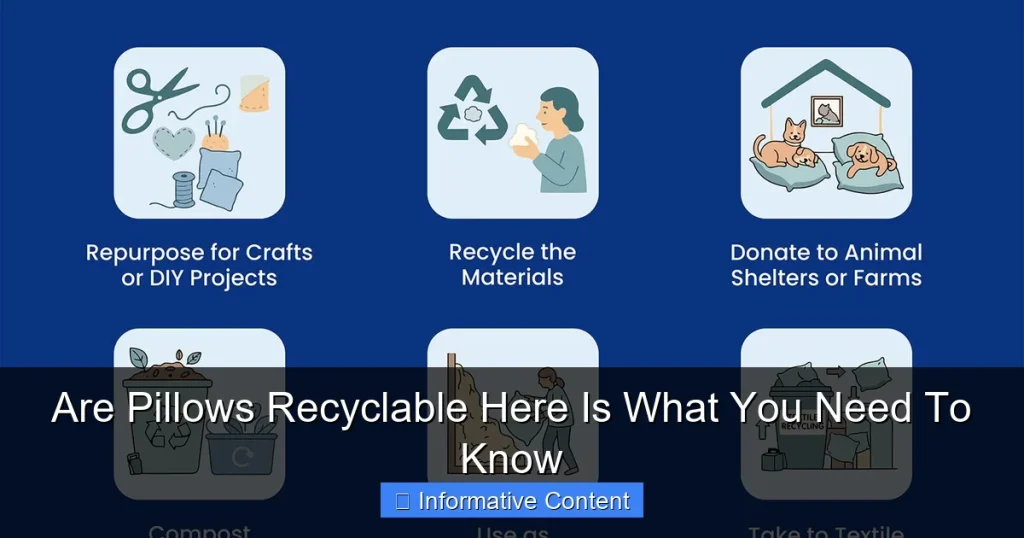
Wondering if pillows can be recycled? While most pillows aren’t curbside recyclable, many can be donated, repurposed, or recycled through specialty programs. This guide breaks down which pillow types are recyclable, how to dispose of them responsibly, and eco-friendly alternatives to reduce waste.
Key Takeaways
- Most pillows aren’t curbside recyclable: Standard curbside recycling programs typically don’t accept pillows due to mixed materials and contamination.
- Pillow recyclability depends on material: Natural fiber pillows like cotton and wool are easier to recycle than synthetic foam options.
- Donation is often the best option: Many shelters and animal rescues accept gently used pillows as donations.
- Specialty recycling programs exist: Companies like TerraCycle and some manufacturers offer pillow recycling services.
- Pillows can be repurposed creatively: Old pillows can be used for pet beds, packing material, or DIY projects.
- Proper cleaning extends pillow life: Regular maintenance can significantly extend your pillow’s lifespan, reducing waste.
- Eco-friendly alternatives are available: Organic and sustainable pillow options are better for the environment.
Quick Answers to Common Questions
Can I put pillows in my regular recycling bin?
No, most curbside recycling programs don’t accept pillows due to mixed materials and hygiene concerns. You’ll need to use alternative disposal methods like donation or specialty recycling services.
What types of pillows are easiest to recycle?
Natural fiber pillows like cotton and wool are the easiest to recycle. Synthetic materials like memory foam and polyester require specialized recycling programs that aren’t widely available.
Where can I donate old pillows?
Homeless shelters, animal rescues, and some thrift stores accept gently used pillows. Always call ahead to confirm they’re accepting donations and check their condition requirements.
How often should I replace my pillows?
Most pillows should be replaced every one to two years, depending on the material and usage. Signs it’s time for replacement include lumps, flat spots, increased allergies, or morning neck pain.
Are there companies that recycle pillows?
Yes, companies like TerraCycle offer pillow recycling programs, and some manufacturers have take-back services. These typically involve shipping your old pillows to specialized facilities for processing.
📑 Table of Contents
Are Pillows Recyclable? Here Is What You Need To Know
Let’s be honest – when your favorite pillow starts losing its shape, you probably toss it in the trash without thinking twice. But have you ever stopped to wonder where those old pillows actually end up? The truth is, millions of pillows end up in landfills every year, and most of them take decades to break down. So, are pillows recyclable? The answer is more complicated than you might think.
While recycling pillows isn’t as straightforward as tossing them in your blue bin, there are actually several eco-friendly options available. Whether you’re dealing with memory foam, feather pillows, or synthetic alternatives, knowing how to properly dispose of them can make a real difference for the environment. Let’s dive into everything you need to know about pillow recycling and sustainable disposal.
Why Pillows Aren’t Typically Recyclable
The Mixed Material Problem
Most pillows are made from a combination of materials that make them difficult to recycle through standard processes. A typical pillow might contain fabric, foam, polyester filling, and sometimes even metal components like zippers. These mixed materials need to be separated before recycling, which is both time-consuming and expensive for recycling facilities.
Hygiene Concerns
Another major hurdle is hygiene. Used pillows accumulate dead skin cells, dust mites, sweat, and other contaminants over time. Most recycling facilities aren’t equipped to sanitize these items, making them unsuitable for traditional recycling programs. This is why many municipalities explicitly exclude textiles and bedding from their recycling guidelines.
Which Pillows Can Be Recycled?
Natural Fiber Pillows
Pillows made from natural materials like cotton, wool, or kapok have the best recycling potential. These organic fibers can be broken down and repurposed into new products. If you have a cotton pillow that’s seen better days, check with local textile recycling centers to see if they accept bedding items.
Memory Foam and Synthetic Pillows
Unfortunately, memory foam and polyester pillows are the hardest to recycle. These synthetic materials don’t biodegrade easily and require specialized processing. However, some companies now offer take-back programs specifically for foam products, so it’s worth checking with the manufacturer before throwing them away.
Feather and Down Pillows
Feather pillows fall somewhere in the middle. While the feathers themselves are biodegradable, the fabric covers and potential chemical treatments complicate the recycling process. Many animal shelters happily accept feather pillow donations, giving your old bedding a second life.
How to Responsibly Dispose of Old Pillows
Donate to Charitable Organizations
One of the best ways to handle old pillows is through donation. Many homeless shelters, animal rescues, and thrift stores accept gently used bedding. Just make sure your pillows are clean and in decent condition before donating. A quick wash in the washing machine can make most pillows donation-ready.
If you’re unsure where to donate, try contacting local organizations directly. Many animal shelters specifically request old pillows for pet bedding, and some refugee resettlement agencies collect bedding for new arrivals.
Use Specialty Recycling Services
Companies like TerraCycle and some pillow manufacturers now offer recycling programs for bedding items. These services typically involve mailing your old pillows to a facility where they’re broken down and the materials are repurposed. While there’s usually a small fee involved, it’s a much better option than sending pillows to a landfill.
Some mattress retailers also accept old pillows when you purchase new ones, so it’s worth asking about take-back programs when shopping for replacements.
Repurpose at Home
Before recycling or donating, consider repurposing your old pillows at home. They make excellent pet beds, can be used as packing material for moves, or can be cut up for craft projects. Even worn-out pillows can serve as knee pads for gardening or cushioning for fragile items during storage.
Extending Your Pillow’s Lifespan
Regular Maintenance Matters
The most sustainable pillow is one you keep using longer. Regular cleaning and proper care can extend your pillow’s life by years. Most pillows should be washed every three to six months, though this varies by material type.
Using a pillow protector can significantly reduce wear and tear while keeping your pillow cleaner between washes. If you’re wondering about pillow care, check out our guide on whether pillow protectors are necessary for maintaining hygiene and longevity.
When to Replace Your Pillow
Even with excellent care, pillows don’t last forever. Most experts recommend replacing pillows every one to two years, depending on the material and usage. Signs it’s time for a new pillow include lumps, permanent flat spots, allergies that seem worse at night, or waking up with neck pain.
Feather pillows can last longer with proper care – our article on how long feather pillows last provides detailed guidance on maximizing their lifespan.
Eco-Friendly Pillow Alternatives
Sustainable Materials
If you’re shopping for new pillows, consider eco-friendly options made from organic cotton, natural latex, or kapok fiber. These materials are biodegradable and often produced with fewer chemicals than synthetic alternatives. While they may cost more upfront, their environmental impact is significantly lower.
Certifications to Look For
When choosing sustainable pillows, look for certifications like GOTS (Global Organic Textile Standard) or OEKO-TEX, which ensure the materials meet environmental and safety standards. These certifications help you verify that your pillow is genuinely eco-friendly rather than just marketed as such.
Conclusion
So, are pillows recyclable? The answer is yes, but it requires more effort than simply tossing them in your recycling bin. While most pillows aren’t accepted in curbside recycling programs, there are plenty of eco-friendly disposal options available. From donating to shelters and animal rescues to using specialty recycling services and repurposing at home, you can keep your old pillows out of landfills.
The best approach is prevention – extending your pillow’s lifespan through regular maintenance and proper care. When it’s finally time to replace your pillow, choose sustainable materials and dispose of the old one responsibly. Small changes in how we handle our bedding can collectively make a big difference for the environment.
Next time you’re ready to replace a pillow, take a moment to consider your options. Your old pillow might still have plenty of life left – just not necessarily as your sleeping companion.
Frequently Asked Questions
Can memory foam pillows be recycled?
Memory foam pillows are difficult to recycle through standard programs but some specialty services accept them. Check with the manufacturer or companies like TerraCycle for recycling options. Repurposing as pet bedding or packing material is often the most practical solution.
Is it safe to donate used pillows to shelters?
Yes, many shelters accept clean, gently used pillows. Wash your pillows thoroughly before donating and call ahead to confirm acceptance policies. Some shelters may have specific requirements regarding pillow condition and cleanliness.
How can I make my pillows last longer?
Use pillow protectors, wash pillows regularly every three to six months, and fluff them daily. Proper maintenance can extend pillow life by years, reducing waste and saving money on replacements.
What should I do with pillows that are too worn to donate?
Too-worn pillows can be repurposed as pet beds, packing material, or craft supplies. You can also check for textile recycling programs in your area that accept heavily used items for industrial repurposing.
Are eco-friendly pillows worth the extra cost?
Eco-friendly pillows made from organic materials are biodegradable and often last longer than synthetic alternatives. While they cost more initially, their longer lifespan and lower environmental impact make them a worthwhile investment for conscious consumers.
Can I compost natural fiber pillows?
Pure cotton or wool pillows without synthetic components can be composted, though they break down slowly. Remove any non-biodegradable elements like zippers first, and shred the pillow to speed up decomposition in your compost bin.