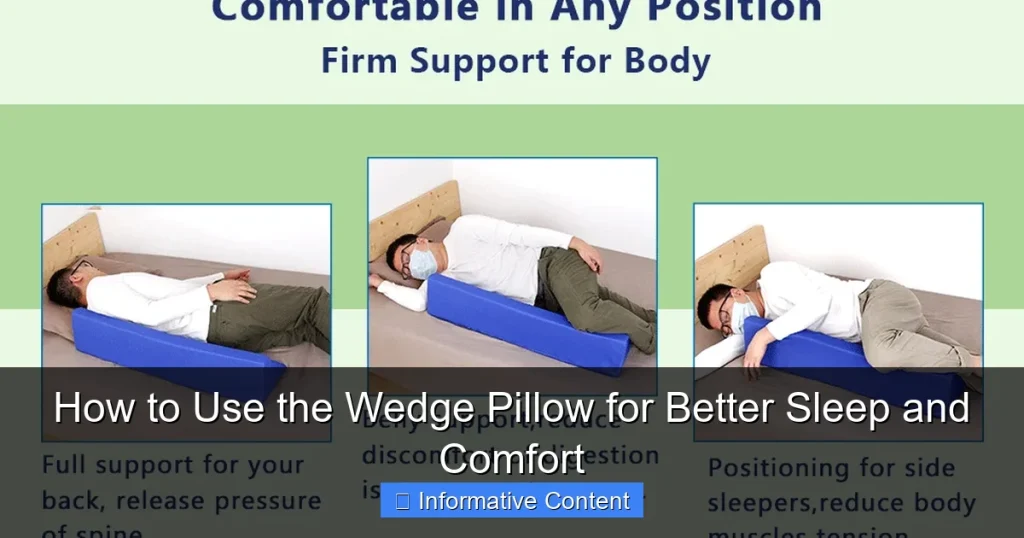
A wedge pillow is a simple yet powerful tool that can transform your sleep quality and daily comfort. Whether you struggle with acid reflux, back pain, or snoring, learning how to use the wedge pillow correctly can make a world of difference. This guide covers everything from choosing the right angle to positioning techniques for specific health concerns.
Key Takeaways
- Elevation matters: A 30-45 degree angle is ideal for most conditions like acid reflux and snoring relief.
- Positioning is key: Place the wedge under your upper body, not just your head, for maximum benefit.
- Multiple uses: Wedge pillows help with acid reflux, back pain, snoring, leg swelling, and pregnancy comfort.
- Choose the right size: Taller wedges work for sleeping, while shorter ones are better for reading or leg elevation.
- Gradual adjustment: Start with a lower angle and increase over time to let your body adapt comfortably.
- Combine with other pillows: Use a regular pillow on top of the wedge for neck support and added comfort.
- Consistency brings results: Use your wedge pillow every night to experience lasting improvements in sleep quality.
Quick Answers to Common Questions
What angle should a wedge pillow be for sleeping?
A 30 to 45 degree angle is ideal for most sleepers. This typically means a pillow height of 6 to 12 inches depending on your body size and the condition you are addressing.
Can you sleep on a wedge pillow every night?
Yes, you can use a wedge pillow every night. In fact, consistent use provides the best results for conditions like acid reflux, snoring, and back pain.
Do you put a pillow on top of a wedge pillow?
Yes, you can place a regular pillow on top of the wedge for additional neck comfort. This combination provides both elevation and cushioning for a better sleep experience.
Is a wedge pillow good for side sleepers?
Absolutely. Side sleepers can benefit from a wedge pillow by placing it under their upper body or tucking it between their knees for hip alignment.
How long does it take to get used to a wedge pillow?
Most people adjust within one to two weeks. Start with a lower elevation and gradually increase the angle to help your body adapt comfortably.
📑 Table of Contents
- What Is a Wedge Pillow and Why Should You Use One?
- How to Use the Wedge Pillow for Acid Reflux and Heartburn
- How to Use the Wedge Pillow for Back Pain Relief
- How to Use the Wedge Pillow for Snoring and Sleep Apnea
- How to Use the Wedge Pillow for Leg Elevation
- How to Use the Wedge Pillow During Pregnancy
- Choosing the Right Wedge Pillow for Your Needs
- Conclusion
What Is a Wedge Pillow and Why Should You Use One?
If you have ever woken up with heartburn, a stiff neck, or that annoying snoring that keeps your partner awake, a wedge pillow might be exactly what you need. A wedge pillow is a triangular-shaped cushion designed to elevate your upper body or legs while you sleep or rest. Unlike regular pillows that flatten over time, wedge pillows maintain their shape and provide consistent support throughout the night.
The beauty of learning how to use the wedge pillow is that it addresses multiple health concerns at once. Doctors often recommend elevation therapy for patients dealing with gastroesophageal reflux disease (GERD), sleep apnea, chronic back pain, and even poor circulation. The gentle incline works with gravity to keep stomach acid down, open airways, and reduce pressure on your spine. It is one of the simplest non-medical interventions you can try at home.
Many people are surprised to discover that a wedge pillow is not just for sleeping. You can use it while reading in bed, watching TV, or even as a back support cushion on the couch. The versatility makes it a worthwhile investment for anyone looking to improve their comfort and overall well-being.
How to Use the Wedge Pillow for Acid Reflux and Heartburn
The Correct Angle for Reflux Relief
Acid reflux happens when stomach acid flows back into your esophagus, causing that burning sensation we all know too well. Lying flat makes it easy for acid to travel upward. When you learn how to use the wedge pillow for reflux, you create a natural barrier using gravity.
Position the wedge so the higher end sits under your shoulders and upper back, not just your head. The ideal elevation is between 6 to 8 inches, which creates roughly a 30 to 45 degree angle. This keeps your esophagus above your stomach and prevents acid from creeping up while you sleep.
Tips for Maximum Effectiveness
For the best results, avoid eating at least two to three hours before bedtime. Combine this with your wedge pillow elevation, and you will likely notice a significant reduction in nighttime heartburn. If you want more detailed guidance on this specific use, check out our guide on how to sleep on a wedge pillow for acid reflux.
Also, try sleeping on your left side while on the wedge. Studies show that left-side sleeping further reduces acid exposure in the esophagus. The combination of elevation and proper sleeping position is a game-changer for reflux sufferers.
How to Use the Wedge Pillow for Back Pain Relief
Supporting Your Spine Naturally
Back pain is one of the most common reasons people turn to wedge pillows. When you lie flat on your back, your spine may not maintain its natural curve, leading to pressure points and discomfort. A wedge pillow helps by distributing your body weight more evenly and reducing strain on your lower back.
To use a wedge pillow for back pain, place it under your knees while lying on your back. This slight elevation takes pressure off your lumbar region and promotes better spinal alignment. If your pain is in the upper back or shoulders, position the wedge under your upper body instead.
For those dealing specifically with lower back issues, our detailed article on how to use a wedge pillow for lower back pain offers additional positioning strategies and expert tips.
Combining with Other Sleep Aids
You can also place a small pillow between your knees while side sleeping on the wedge. This keeps your hips aligned and reduces twisting in your lower back. Many physical therapists recommend this combination for patients recovering from back injuries or dealing with chronic pain conditions.
How to Use the Wedge Pillow for Snoring and Sleep Apnea
Opening Your Airways
Snoring occurs when airflow is partially blocked during sleep, causing tissues in your throat to vibrate. Sleeping flat allows your tongue and soft palate to collapse backward, narrowing your airway. Elevating your upper body with a wedge pillow helps keep these tissues in their natural position.
When figuring out how to use the wedge pillow for snoring, the key is to elevate your entire upper body from the waist up. Simply stacking regular pillows under your head is not enough and can actually make things worse by bending your neck at an awkward angle. A wedge provides a smooth, continuous incline that keeps your airway open from chest to head.
Finding Your Ideal Position
Start with a moderate elevation of about 30 degrees. If snoring persists, gradually increase the angle. Some people find relief at 45 degrees, while others do well at just 20 degrees. The goal is to find the lowest elevation that still reduces your snoring effectively.
Side sleeping on the wedge can further improve results. It prevents your tongue from falling backward and reduces the gravitational pull on throat tissues. If you are not a natural side sleeper, try the techniques in our article on how to use a wedge pillow for side sleeping to make the transition easier.
How to Use the Wedge Pillow for Leg Elevation
Reducing Swelling and Improving Circulation
Elevating your legs is a time-tested method for reducing swelling, improving blood flow, and relieving varicose vein discomfort. A wedge pillow is perfect for this because it provides a stable, consistent elevation that regular pillows cannot match.
Simply place the wedge at the foot of your bed and rest your legs on top. Your feet should be slightly above the level of your heart for optimal circulation benefits. This position is especially helpful for people who spend long hours standing or sitting during the day.
Our comprehensive guide on how to use a wedge pillow for legs covers everything from post-surgery recovery to everyday leg fatigue relief.
Best Practices for Leg Elevation
Try to elevate your legs for 15 to 30 minutes at a time, several times a day. You can do this while watching TV, reading, or before bed. Consistency is more important than duration when it comes to seeing real improvements in circulation and swelling.
How to Use the Wedge Pillow During Pregnancy
Comfort for Expecting Mothers
Pregnancy brings a unique set of sleep challenges, from heartburn to back pain to difficulty finding a comfortable position. A wedge pillow can address many of these issues simultaneously, making it a must-have for expecting mothers.
During pregnancy, use the wedge to elevate your upper body and reduce reflux, which is common in the second and third trimesters. You can also tuck the wedge under your belly for support while side sleeping, or place it between your knees to ease hip and pelvic pressure.
For more pregnancy-specific advice, read our article on how to use a wedge pillow during pregnancy. It covers trimester-by-trimester recommendations and safety tips.
Postpartum Uses
The wedge pillow does not lose its value after delivery. Many new mothers use it as a nursing support pillow or to maintain a comfortable position while recovering from a C-section. It is one of those products that grows with your needs.
Choosing the Right Wedge Pillow for Your Needs
Size and Angle Considerations
Not all wedge pillows are created equal. They come in various heights, widths, and foam densities. For sleeping purposes, a wedge that is 10 to 12 inches high works best for most adults. If you primarily need it for reading or leg elevation, a 6 to 8 inch wedge may be sufficient.
The width matters too. A wider wedge gives you room to shift positions during the night without rolling off. Look for one that is at least 24 inches wide for comfortable sleeping. Memory foam options conform to your body shape and provide excellent support, while firmer foam wedges maintain their shape better over time.
Material and Cover Quality
Choose a wedge pillow with a removable, washable cover. Since you will be using it every night, easy cleaning is essential. Hypoallergenic materials are a bonus, especially if you have allergies or sensitive skin. Some wedge pillows come with cooling gel layers, which are great for hot sleepers.
If you are unsure about which pillow type suits your needs, our guide on how to choose the right pillow can help you make an informed decision based on your sleeping style and health concerns.
Conclusion
Learning how to use the wedge pillow properly can be a turning point for your sleep quality and overall comfort. Whether you are battling acid reflux, chronic back pain, snoring, or pregnancy discomfort, this simple tool offers a drug-free solution that really works. The key is to choose the right size, position it correctly for your specific needs, and use it consistently every night.
Start with a moderate elevation and adjust as needed. Combine your wedge pillow with healthy sleep habits like avoiding late meals and maintaining a regular sleep schedule. Before you know it, you will wonder how you ever slept without it. Your body will thank you for the extra support and elevation.
Frequently Asked Questions
Can a wedge pillow help with sleep apnea?
Yes, a wedge pillow can help mild to moderate sleep apnea by elevating your upper body and keeping your airway open. However, it should not replace CPAP therapy or medical treatment for severe cases.
How do I clean my wedge pillow?
Remove the cover and wash it according to the manufacturer’s instructions. Spot clean the foam with mild soap and water, then let it air dry completely before using it again.
What is the difference between a wedge pillow and regular pillows?
A wedge pillow is made of firm foam that maintains its triangular shape, providing consistent elevation. Regular pillows flatten over time and do not offer the same level of support or incline.
Can children use wedge pillows?
Children can use smaller wedge pillows designed for their size. Always supervise young children and consult your pediatrician before introducing a wedge pillow for health concerns.
Will a wedge pillow fix my snoring completely?
A wedge pillow can significantly reduce snoring for many people, but results vary. If snoring persists despite using a wedge, consult a doctor to rule out underlying conditions like obstructive sleep apnea.
How do I know what size wedge pillow to buy?
Consider your height, bed size, and intended use. Taller individuals and those using it for sleeping generally need a 10 to 12 inch wedge, while shorter wedges around 6 to 8 inches work well for reading or leg elevation.