
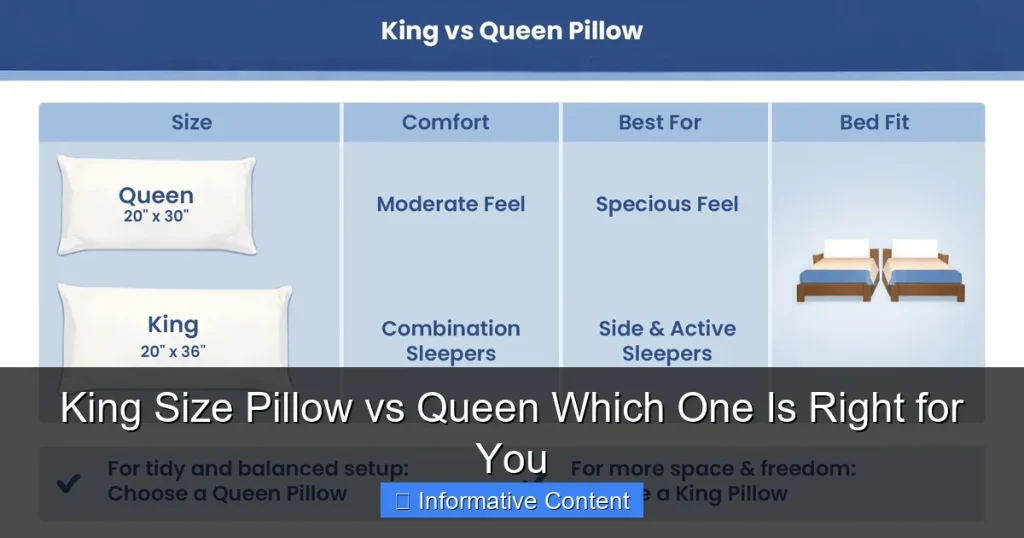
Choosing between a king size pillow vs queen comes down to bed size, sleeping position, and personal comfort. King pillows offer extra length ideal for restless sleepers and larger beds, while queen pillows fit perfectly on queen-sized mattresses and suit most sleepers. This guide breaks down every difference so you can pick the perfect pillow for a great night’s sleep.
Key Takeaways
- Size Difference: King pillows measure 20 x 36 inches, while queen pillows measure 20 x 30 inches — that’s 6 extra inches of length.
- Bed Compatibility: King pillows are designed for king and California king beds, while queen pillows match queen-sized mattresses perfectly.
- Sleeping Position Matters: Side sleepers and restless sleepers often prefer king pillows for the extra surface area.
- Pillowcase Availability: Both sizes have widely available pillowcases, but king pillowcases are slightly harder to find in stores.
- Price Difference: King pillows typically cost slightly more than queen pillows due to additional filling material.
- Not Just About Bed Size: You can use a king pillow on a queen bed for extra comfort, though it may hang over the edges slightly.
- Personal Preference Rules: Ultimately, the best pillow depends on your body size, sleep habits, and comfort needs.
Quick Answers to Common Questions
What is the size difference between a king and queen pillow?
A king pillow measures 20 x 36 inches, while a queen pillow measures 20 x 30 inches. The king pillow is six inches longer, giving you more surface area for head and neck support.
Can I use king pillows on a queen bed?
Yes, you can use king pillows on a queen bed. They will hang over the edges slightly, but many people prefer the extra length for added comfort and support.
Are king pillows more expensive than queen pillows?
King pillows typically cost 10-20% more than queen pillows because they require more filling material. The exact price difference depends on the brand and material.
Which pillow size is best for side sleepers?
Side sleepers often prefer king pillows because the extra length provides more room to shift positions without sliding off the pillow during the night.
Do king and queen pillows use different pillowcases?
Yes, king and queen pillows require different sized pillowcases. A king pillowcase is designed for 20 x 36 inch pillows, while a queen pillowcase fits 20 x 30 inch pillows.
📑 Table of Contents
King Size Pillow vs Queen: Which One Is Right for You?
Shopping for new pillows sounds simple until you’re standing in the aisle staring at dozens of options. One of the most common questions people face is the king size pillow vs queen debate. Which one should you pick? Does the extra length really matter? And will a king pillow even fit on your queen bed?
The truth is, the right pillow size can make a huge difference in how well you sleep. A pillow that’s too small might leave your neck unsupported. One that’s too big could feel awkward and take up too much bed space. In this guide, we’ll break down everything you need to know about the king size pillow vs queen comparison so you can make a confident choice.
Understanding the Size Difference
King Pillow Dimensions
A standard king pillow measures 20 inches wide by 36 inches long. That extra six inches of length compared to a queen pillow gives you more room to spread out. If you’re someone who moves around a lot during the night, that additional space can be a game-changer. King pillows are the default choice for king and California king beds, where they sit side by side without gaps.
Queen Pillow Dimensions
A standard queen pillow measures 20 inches wide by 30 inches long. It’s the most popular pillow size in the United States and fits perfectly on queen-sized mattresses. Two queen pillows placed side by side cover the width of a queen bed nicely. They’re also a great option for twin and full beds when you want a slightly larger pillow.
The Six-Inch Gap
When comparing a king size pillow vs queen, the six-inch difference might not sound like much. But in practice, it’s noticeable. That extra length means your head and neck stay supported even if you shift positions during the night. For taller sleepers or those who like to hug their pillow, king size offers a clear advantage.
Which Bed Size Works Best?
King Pillows on King Beds
This is the most natural pairing. Two king pillows sit perfectly across a standard king bed (76 x 80 inches) or a California king bed (72 x 84 inches). They fill the width of the bed without leaving awkward gaps. If you have a king bed, king pillows are the way to go. You can learn more about arranging them properly in our guide on how to arrange pillows on a king size bed.
Queen Pillows on Queen Beds
Two queen pillows fit a queen bed (60 x 80 inches) beautifully. They provide full coverage and leave just enough room on each side for a decorative pillow or two. Queen pillows are the standard choice for queen beds and are widely available in every material and firmness level imaginable.
Mixing and Matching
Here’s something many people don’t realize — you don’t have to match your pillow size exactly to your bed size. Placing king pillows on a queen bed works fine if you prefer the extra length. The pillows will hang over the edges a bit, but many people find the added comfort worth it. On the flip side, using queen pillows on a king bed leaves noticeable gaps in the center.
Comfort and Sleeping Position
Side Sleepers
If you sleep on your side, both king and queen pillows can work well. However, king pillows give you more surface area to work with. You can shift from one side to the other without sliding off the pillow. The extra length also makes it easier to tuck part of the pillow under your shoulder for added support.
Back Sleepers
Back sleepers generally do well with either size. The key factor here is pillow loft (thickness) rather than length. That said, if you’re a taller person, a king pillow ensures your head and upper shoulders stay fully supported throughout the night.
Stomach Sleepers
Stomach sleepers typically prefer thinner, softer pillows. Size matters less for this sleeping position, but a queen pillow is usually sufficient. A king pillow might feel unnecessarily large if you sleep primarily on your stomach.
Restless Sleepers
If you toss and turn all night, the king size pillow vs queen decision leans heavily toward king. The extra six inches mean you’re far less likely to wake up with your head hanging off the edge of the pillow. That alone can improve your sleep quality significantly.
Pillowcases and Accessories
Finding the Right Pillowcase
Both king and queen pillowcases are easy to find online and in most home goods stores. However, queen pillowcases tend to have more variety in colors, patterns, and fabrics since queen is the more popular size. If you go with king pillows, you’ll want to check out our guide on what size is a king pillowcase to make sure you’re buying the right fit.
Protectors and Shams
Pillow protectors and shams come in both king and queen sizes. If you’re investing in quality pillows, adding a pillow protector is a smart move. It extends the life of your pillow by shielding it from sweat, oils, and dust mites. Make sure to match the protector size to your pillow size for a snug fit.
Price and Value Comparison
Cost Differences
King pillows generally cost a bit more than queen pillows. The price difference is usually around 10-20%, depending on the brand and material. This makes sense because king pillows require more filling material. Memory foam, down, and latex king pillows all carry a small premium over their queen counterparts.
Is the Extra Cost Worth It?
When weighing the king size pillow vs queen question from a value perspective, consider how much you use your pillow. You spend roughly a third of your life sleeping. If the extra six inches of a king pillow means better sleep, the small price increase is absolutely worth it. Think of it as an investment in your health and well-being.
How to Choose the Right Pillow for You
Consider Your Bed Size
Start with your bed. If you have a king bed, king pillows are the logical choice. If you have a queen bed, queen pillows fit best — but king pillows work too if you prefer the extra length.
Think About Your Sleep Style
Are you a restless sleeper? Go king. Do you sleep in one position all night? Queen might be perfect. Do you share your bed with a partner? Make sure there’s enough pillow space for both of you.
Try Before You Buy
If possible, test both sizes in person. Lie down on a display model or visit a store where you can feel the difference. Comfort is personal, and no amount of reading can replace firsthand experience. For more tips on finding your ideal pillow, check out our guide on how to choose the right pillow.
Conclusion
The king size pillow vs queen decision isn’t complicated once you know what to look for. King pillows offer extra length that benefits restless sleepers, taller individuals, and anyone with a king-sized bed. Queen pillows are the versatile, widely available standard that works beautifully on queen beds and suits most sleepers.
At the end of the day, the best pillow is the one that helps you sleep comfortably through the night. Whether you choose king or queen, prioritize quality materials, proper support, and a size that matches your sleep habits. Your body will thank you every morning.
Frequently Asked Questions
Is a king pillow too big for a queen bed?
A king pillow isn’t too big for a queen bed, but it will extend past the edges by a few inches on each side. Many people use king pillows on queen beds for the extra comfort and support they provide.
How many pillows fit on a king bed?
Two king pillows fit perfectly across a king bed. You can also use three standard or queen pillows across a king bed, though there may be small gaps between them.
Should I buy king or queen pillows for a guest room?
Queen pillows are the safest choice for a guest room because they fit most bed sizes comfortably and are the most universally preferred pillow size among sleepers.
Do king pillows provide better neck support than queen pillows?
King pillows don’t inherently provide better neck support since support depends on loft and material. However, the extra length keeps your head on the pillow longer if you move around at night.
What material is best for king and queen pillows?
The best material depends on personal preference. Memory foam offers firm support, down provides soft luxury, and latex gives a responsive, bouncy feel. Both king and queen pillows are available in all materials.
How often should I replace my king or queen pillow?
Most experts recommend replacing pillows every 1-2 years. If your pillow doesn’t spring back when folded in half, it’s time for a new one regardless of whether it’s king or queen size.