
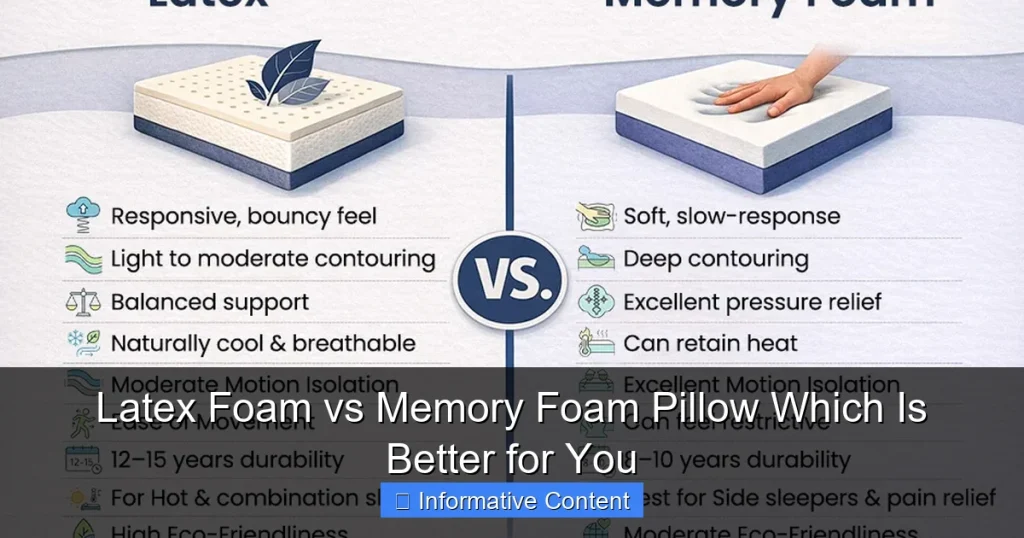
Choosing between a latex foam vs memory foam pillow can be tough, as both offer unique sleep benefits. Memory foam excels at pressure relief and contouring, while latex provides bouncier support and better cooling. Ultimately, the best choice depends on your personal sleep style, comfort preferences, and budget.
- Material Origin: Latex foam is natural (from rubber trees) or synthetic, while memory foam is a type of polyurethane (viscoelastic) foam.
- Feel & Support: Memory foam contours closely to your head and neck, offering pressure relief. Latex is bouncier and provides more resilient, all-around support.
- Temperature Regulation: Latex foam is naturally breathable and cooler. Traditional memory foam can trap heat, though gel-infused versions help.
- Durability & Lifespan: High-quality latex pillows are incredibly durable and can last 10+ years. Memory foam pillows typically last 3-5 years.
- Hypoallergenic Properties: Natural latex is inherently resistant to dust mites and mold. Memory foam can be treated but is often denser.
- Price Point: Latex foam pillows are generally more expensive upfront due to material costs. Memory foam pillows are widely available at various price points.
- Motion Transfer: Memory foam absorbs movement well, ideal for couples. Latex has more “bounce,” which can mean more motion transfer.
Quick Answers to Common Questions
Is latex or memory foam better for neck pain?
Both can be good, but it depends on the cause. Memory foam’s contouring is excellent for pressure relief. Latex’s supportive lift can be better for maintaining neutral spine alignment. A cervical pillow made from either material is often recommended.
Do latex pillows smell?
New latex pillows can have a mild, natural rubber smell. This is normal and is not the chemical “off-gassing” associated with some memory foams. It typically fades within a week.
Can you wash a memory foam or latex foam pillow?
You should never submerge either type of foam in water. Spot clean the foam core with a damp cloth and mild detergent. Always remove and wash the pillow cover according to its care instructions.
How long do these pillows last?
High-quality latex foam pillows can last 10+ years. Memory foam pillows generally have a lifespan of 3-5 years before they start to lose their supportive properties.
Which is cooler to sleep on?
Latex foam is generally cooler than standard memory foam because of its naturally breathable, open-cell structure. Gel-infused memory foam is designed to be cooler but may not match latex’s natural airflow.
📑 Table of Contents
Introduction: The Great Pillow Debate
We’ve all been there. Staring at a wall of pillows, completely overwhelmed. The quest for the perfect night’s sleep often leads us down a rabbit hole of materials and marketing claims. Two heavyweights constantly battle for the top spot: latex foam and memory foam. But when it comes to the latex foam vs memory foam pillow showdown, which one truly deserves a place on your bed?
This isn’t just about fluff. Your pillow is your sleep partner, silently supporting your head and neck for hours. The wrong choice can lead to morning stiffness, poor sleep quality, and frustration. The right choice can feel like a cloud, aligning your spine and melting away tension. Let’s break down these popular contenders to help you decide which champion is right for you.
What Exactly Are These Foams?
Before we dive into the battle, let’s understand our fighters. Knowing the basics of what a memory foam pillow is and its latex counterpart sets the stage for a fair comparison.
The Science Behind Memory Foam
Memory foam, or viscoelastic polyurethane foam, is famous for its slow response and contouring ability. It was originally developed by NASA! When you press into it, it molds to your shape, then slowly returns to its original form. This creates that signature “hugging” feeling.
The Natural (and Synthetic) World of Latex
Latex foam comes from the sap of rubber trees (natural) or is petroleum-based (synthetic). It’s processed using either the Dunlop (denser, firmer) or Talalay (softer, more consistent) method. Think of it as a responsive, bouncy foam that offers support without the deep sink of memory foam.
Head-to-Head: Latex Foam vs Memory Foam Pillow
Now for the main event. Let’s compare these two across the factors that matter most for sleep.
1. Comfort and Support Feel
This is the core of the latex foam vs memory foam pillow debate. Memory foam is the king of conforming support. It cradles your head and neck, filling in gaps and distributing pressure evenly. This is fantastic for side sleepers who need that extra fill between their ear and shoulder.
Latex, on the other hand, offers responsive support. It pushes back gently, providing a more lifted, buoyant feel. If you dislike the “sinking” sensation of memory foam or prefer a pillow that feels firmer and more supportive in a traditional sense, latex might be your match.
2. Temperature Regulation: Staying Cool
Hot sleepers, listen up! Traditional memory foam has a bad reputation for sleeping hot. Its dense structure can trap body heat. While modern versions use open-cell designs or gel infusions to improve airflow, it’s still a common complaint.
Latex foam is a natural winner here. Its structure is inherently more breathable, with interconnected air channels that promote excellent airflow. If you constantly flip your pillow to find the cool side, a latex pillow could be a game-changer.
3. Durability and Longevity
You want your investment to last. High-quality latex foam is incredibly resilient. It’s resistant to sagging and can maintain its shape and support for a decade or more.
Memory foam pillows are durable, but they have a shorter lifespan. Over time, especially with lower-density foams, they can develop permanent indentations and lose their supportive qualities. A good memory foam pillow typically lasts 3-5 years.
4. Allergies and Hygiene
For allergy sufferers, material matters. Natural latex is naturally antimicrobial and resistant to dust mites and mold – a huge plus for a clean sleep environment.
Memory foam isn’t inherently hypoallergenic, but many are treated with antimicrobial agents. However, its denser structure can still harbor allergens if not properly maintained with a removable, washable cover. Using a pillow protector is a smart move for any pillow type.
5. Motion Isolation
Sharing a bed? Memory foam is the undisputed champion of motion isolation. It absorbs movement, so when your partner tosses and turns, you’re less likely to feel it. This can lead to significantly less sleep disruption.
Latex foam has more elasticity and “bounce.” This means movement can transfer more easily across the surface, which might be a consideration for light sleepers with restless partners.
6. Price and Value
Generally, latex foam pillows carry a higher price tag. The cost of raw materials (especially natural latex) and manufacturing processes contribute to this. You’re paying for exceptional durability and natural properties.
Memory foam pillows are available at a vast range of prices, often making them the more budget-friendly option upfront. However, factor in their potentially shorter lifespan when considering long-term value.
7. Weight and Smell
Latex pillows are typically heavier than memory foam ones. Some people love the substantial feel, while others find them less easy to adjust.
Both materials can have an initial “off-gassing” smell (a chemical odor from manufacturing). This is usually more noticeable with memory foam. It typically dissipates within a few days in a well-ventilated room. Look for CertiPUR-US® certified foams for lower VOC emissions.
So, Which Pillow Is Better for YOU?
There’s no single “best” in the latex foam vs memory foam pillow fight. It’s deeply personal. Here’s a quick guide:
Choose a MEMORY FOAM pillow if you:
- Are a side sleeper needing pressure relief.
- Love the feeling of your pillow contouring to your shape.
- Share a bed and need excellent motion isolation.
- Have a tighter budget.
Choose a LATEX FOAM pillow if you:
- Sleep hot and need maximum breathability.
- Prefer a bouncier, more responsive feel.
- Want an incredibly long-lasting pillow.
- Have allergies and prioritize natural, hypoallergenic materials.
- Don’t mind a higher initial investment.
Conclusion: Your Perfect Sleep Match
Ultimately, choosing between a latex foam vs memory foam pillow comes down to your personal sleep style and priorities. Think about what you dislike about your current pillow. Is it too hot? Too flat? Does it not support your neck? Your answers will point you in the right direction.
Both materials offer fantastic benefits that can dramatically improve your sleep quality. Memory foam is a pressure-relieving hug, while latex is a cool, resilient cloud. Consider your needs, and don’t be afraid to try one out. After all, the best pillow is the one that gives you the best night’s sleep, night after night. For more help, check out our guide on how to choose the right pillow.
Frequently Asked Questions
Is latex foam or memory foam more expensive?
Latex foam pillows are typically more expensive upfront due to the cost of raw materials and manufacturing. Memory foam pillows have a wider range of prices, with many affordable options available.
Are latex pillows good for side sleepers?
Yes, especially firmer latex pillows. They provide the necessary support to keep the head and neck aligned with the spine, preventing the shoulder from hunching up during the night.
Is memory foam bad for hot sleepers?
Traditional memory foam can trap heat, making it uncomfortable for hot sleepers. However, many modern memory foam pillows use cooling gels, copper infusions, or open-cell technology to improve temperature regulation.
Is latex foam pillow good for allergies?
Yes, natural latex is naturally resistant to dust mites, mold, and mildew, making it an excellent hypoallergenic choice for people with allergies or asthma.
Can I use a memory foam pillow if I’m a stomach sleeper?
It’s possible, but you need a very thin, low-loft memory foam pillow. Stomach sleepers need minimal elevation to keep their neck in a neutral position, and a thick, conforming pillow could strain it.
Is latex foam pillow good for back sleepers?
Yes, a medium-loft latex pillow is often ideal for back sleepers. It provides enough support to cradle the head and maintain the natural curve of the neck without pushing the head too far forward.
Pingback: 5 Best Latex Pillows for Superior Comfort and Support: Expert-Tested 2026