
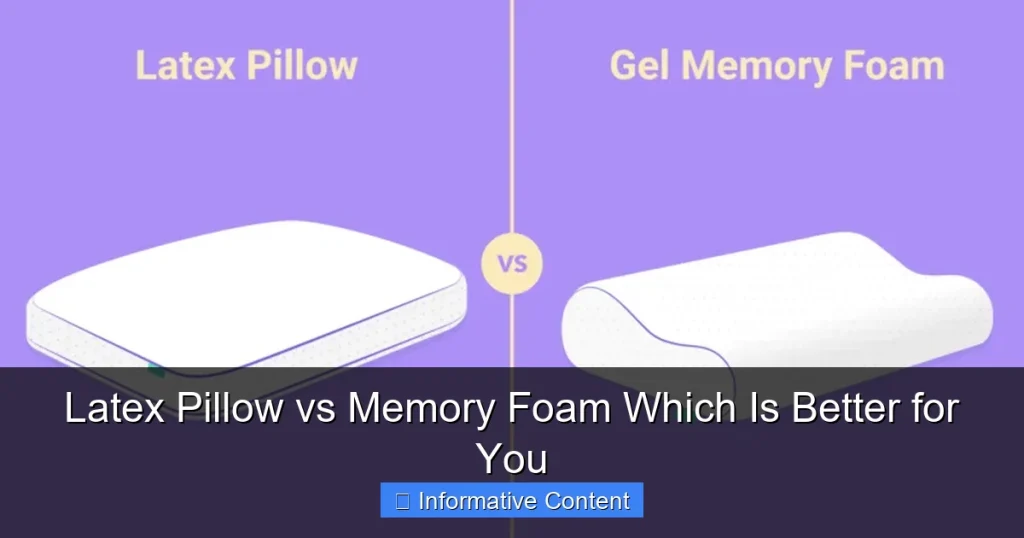
Choosing between a latex pillow and a memory foam pillow can feel overwhelming, but understanding their key differences makes the decision much easier. Latex pillows offer natural bounce, superior cooling, and long-lasting durability, while memory foam pillows excel at contouring to your head and neck for targeted pressure relief. Your ideal choice depends on your sleep position, body temperature, and personal comfort preferences.
Key Takeaways
- Material Origin: Latex comes from rubber tree sap and can be natural or synthetic, while memory foam is a petroleum-based polyurethane foam originally developed by NASA.
- Support Style: Memory foam molds closely to your head and neck shape, while latex provides a firmer, more responsive bounce-back support.
- Temperature Regulation: Latex pillows sleep significantly cooler than memory foam, which tends to trap body heat.
- Durability: Latex pillows typically last 3-5 years longer than memory foam pillows before losing their shape.
- Allergy-Friendly: Natural latex is naturally resistant to dust mites and mold, making it a better choice for allergy sufferers.
- Price Point: Memory foam pillows are generally more affordable upfront, while latex pillows cost more but last longer.
- Sleep Position Matters: Side sleepers often prefer memory foam for pressure relief, while back and stomach sleepers may benefit from latex’s consistent support.
Quick Answers to Common Questions
Is latex or memory foam better for neck pain?
Memory foam is generally better for neck pain because it contours precisely to your head and neck shape, providing targeted pressure relief. However, latex can also work well for neck pain by offering consistent, responsive support that maintains spinal alignment.
Do latex pillows smell like memory foam?
Latex pillows have a mild, natural rubber scent that fades within a few days. Memory foam pillows tend to have a stronger chemical smell from off-gassing that can last longer. Both smells dissipate with proper ventilation.
Can I wash a latex or memory foam pillow?
Neither latex nor memory foam pillows should be submerged in water. Spot clean both with a damp cloth and mild detergent. Always use a pillow protector and washable pillowcase to keep them clean. Air dry thoroughly if they get wet.
Which pillow is better for hot sleepers?
Latex pillows are significantly better for hot sleepers. Their natural open-cell structure allows air to circulate freely, while memory foam tends to trap body heat. Gel-infused memory foam helps but still doesn’t match latex’s cooling ability.
How often should I replace my pillow?
Replace memory foam pillows every 2-3 years and latex pillows every 4-6 years. Signs it’s time for a new pillow include visible flattening, lumps, persistent odors, or waking up with neck and shoulder pain.
📑 Table of Contents
- Latex Pillow vs Memory Foam: Which Is Better for You
- What Exactly Is a Latex Pillow?
- What Exactly Is a Memory Foam Pillow?
- Comfort and Support: The Head-to-Head Comparison
- Temperature Regulation: The Cooling Factor
- Durability and Longevity
- Health and Allergy Considerations
- Price Comparison: What Should You Expect to Spend?
- Which Pillow Is Right for Your Sleep Position?
- The Final Verdict: Making Your Decision
Latex Pillow vs Memory Foam: Which Is Better for You
You’ve been tossing and turning all night. Your neck aches. Your head feels like it’s sinking into quicksand. Sound familiar? The problem might not be your mattress — it could be your pillow. When it comes to the great debate of latex pillow vs memory foam, millions of sleepers find themselves stuck between two excellent options.
Both latex and memory foam pillows have earned loyal followings for good reason. They each offer unique benefits that can transform your sleep quality. But they work in fundamentally different ways, and understanding those differences is the key to waking up refreshed instead of reaching for the pain relievers.
In this guide, we’ll break down everything you need to know about latex and memory foam pillows. By the end, you’ll have a clear picture of which one deserves a spot on your bed tonight.
What Exactly Is a Latex Pillow?
The Natural Origins of Latex
Latex pillows are made from the sap of rubber trees, primarily harvested in Southeast Asia. This milky white liquid is processed through either the Dunlop or Talalay method to create the pillow filling. The Dunlop process produces a denser, firmer foam, while the Talalay process creates a softer, more uniform texture.
Some latex pillows use 100% natural latex, while others blend natural and synthetic materials. If you’re eco-conscious, look for certifications like GOLS (Global Organic Latex Standard) to ensure you’re getting a genuinely natural product.
How Latex Feels to Sleep On
Imagine pressing your hand into a pillow and feeling it gently push back. That’s the latex experience. It has a natural buoyancy that keeps your head elevated without the sinking sensation. The material responds quickly to movement, so you won’t feel stuck when you shift positions during the night.
Many sleepers describe latex as feeling like a cloud with a backbone — soft enough to cradle your head but firm enough to maintain proper spinal alignment.
What Exactly Is a Memory Foam Pillow?
The Science Behind Memory Foam
Memory foam, also called viscoelastic foam, was originally developed by NASA in the 1960s for aircraft seat cushioning. It’s made from polyurethane with additional chemicals that increase its density and viscosity. When you press into memory foam, it slowly molds to the shape of your body and returns to its original form once pressure is removed.
Modern memory foam pillows come in various densities and often feature cooling gel infusions or open-cell structures to address the material’s tendency to retain heat.
How Memory Foel Feels to Sleep On
Memory foam creates a hugging sensation around your head and neck. It distributes weight evenly, which can be a game-changer for people who suffer from pressure points. The foam cradles your contours, creating a custom-feeling fit that many people find incredibly comfortable.
However, that same contouring effect can feel restrictive to some sleepers, especially those who move around frequently during the night.
Comfort and Support: The Head-to-Head Comparison
Pressure Relief
When it comes to pressure relief, memory foam has a slight edge. Its ability to conform precisely to your head and neck shape means it can eliminate pressure points more effectively. This makes it particularly beneficial for people with chronic neck or shoulder pain.
Latex provides excellent support through its natural resilience rather than deep contouring. It keeps your spine aligned without enveloping your head, which some people prefer for a less enclosed feeling.
Spinal Alignment
Both materials can support proper spinal alignment, but they achieve it differently. Memory foam adapts to your specific shape, while latex provides consistent, uniform support regardless of your head position. For back sleepers, latex often maintains alignment better because it doesn’t allow the head to sink too deeply.
If you’re unsure about your ideal pillow height and firmness, check out our guide on how to choose the right pillow for personalized recommendations based on your sleep style.
Temperature Regulation: The Cooling Factor
Why Memory Foam Runs Hot
Here’s where the latex pillow vs memory foam debate gets heated — literally. Traditional memory foam has a closed-cell structure that traps body heat. If you’re a hot sleeper, you’ve probably woken up with a sweaty pillow more times than you’d like to admit.
Manufacturers have addressed this with gel-infused memory foam and open-cell designs, but these solutions only partially solve the problem. The foam still retains more heat than most alternatives.
Latex’s Natural Cooling Advantage
Latex naturally has an open-cell structure that allows air to circulate freely through the pillow. This means heat escapes rather than getting trapped. Many latex pillows also feature pin-core holes drilled through the material to enhance airflow even further.
If you live in a warm climate or simply run hot at night, latex is the clear winner in the temperature department. You’ll notice the difference from the very first night.
Durability and Longevity
How Long Does Memory Foam Last?
Most memory foam pillows last between 2-3 years before they start losing their supportive properties. Over time, the foam breaks down, becomes compressed, and loses its ability to bounce back. You’ll notice it feels flatter and less responsive.
Cheaper memory foam pillows can deteriorate even faster, sometimes within 12-18 months of regular use.
Latex’s Impressive Lifespan
Latex pillows are the marathon runners of the pillow world. A high-quality natural latex pillow can last 4-6 years or even longer with proper care. The material maintains its shape and resilience far better than memory foam because of its inherent elastic properties.
While latex costs more upfront, the longer lifespan often makes it more cost-effective over time. Think of it as buying one latex pillow versus two or three memory foam pillows over the same period.
Health and Allergy Considerations
Memory Foam and Off-Gassing
New memory foam pillows often release a chemical smell known as off-gassing. This occurs as volatile organic compounds (VOCs) are released from the foam. While generally considered safe, the smell can be unpleasant and may irritate people with chemical sensitivities.
Memory foam also tends to attract dust mites more readily than latex, which can be problematic for allergy sufferers.
Latex’s Hypoallergenic Properties
Natural latex is naturally resistant to dust mites, mold, and mildew. This makes it an excellent choice for people with allergies or asthma. The antimicrobial properties of latex create an environment where common allergens struggle to thrive.
One important caveat: if you have a latex allergy, obviously avoid latex pillows entirely. For everyone else, natural latex is one of the healthiest pillow materials available.
Price Comparison: What Should You Expect to Spend?
Memory Foam Pricing
Memory foam pillows are generally the more budget-friendly option. You can find decent quality memory foam pillows ranging from $25-$60. Premium options with cooling gel, adjustable fills, or ergonomic designs can cost $70-$120.
The lower entry price makes memory foam accessible, but remember that you’ll likely need to replace it more frequently.
Latex Pillow Pricing
Latex pillows typically start around $50-$80 for basic options and can go up to $150-$200 for premium natural latex with organic certifications. The higher price reflects the more expensive raw materials and manufacturing process.
When you factor in the longer lifespan, the cost per year of use often evens out between the two materials.
Which Pillow Is Right for Your Sleep Position?
Side Sleepers
Side sleepers need a pillow that fills the gap between their shoulder and head. Memory foam’s contouring ability makes it a popular choice here, as it adapts to the unique shape of your shoulder and neck. However, a firmer latex pillow with adequate loft can work equally well.
Back Sleepers
Back sleepers benefit from moderate support that keeps the head aligned with the spine without pushing it forward. Latex pillows tend to excel here because they provide consistent support without excessive sinking.
Stomach Sleepers
Stomach sleepers need a thin, soft pillow to avoid straining the neck. Both materials work, but a softer Talalay latex pillow or a low-loft memory foam option would be ideal. The key is keeping the pillow thin enough to maintain a neutral spine position.
For more specific guidance on using pillows to address pain, explore our article on how to use a pillow for neck pain relief.
The Final Verdict: Making Your Decision
So, in the battle of latex pillow vs memory foam, which one comes out truly depends on your personal priorities. Choose latex if you want a cooler sleeping surface, longer-lasting pillow, natural materials, and responsive support. Choose memory foam if you prioritize deep pressure relief, contouring comfort, and a lower upfront cost.
Neither option is universally better — they’re just different tools for different sleepers. The best pillow is the one that helps you fall asleep faster, stay asleep longer, and wake up without aches and pains.
Still exploring your options? Learn more about what is a memory foam pillow and dive deeper into the specifics of each material before making your final decision. Your perfect night’s sleep is waiting.
Frequently Asked Questions
Is a latex pillow firmer than memory foam?
Generally, yes. Latex pillows feel firmer and more responsive because the material has natural bounce and pushes back against pressure. Memory foam feels softer initially as it molds to your shape, though firmness varies by density in both materials.
Are latex pillows good for side sleepers?
Latex pillows can work well for side sleepers, especially firmer options with higher loft. They provide the elevation needed to keep the spine aligned. However, some side sleepers prefer memory foam’s deeper contouring for filling the shoulder-to-head gap.
Does memory foam flatten over time?
Yes, memory foam gradually flattens and loses its supportive properties with regular use. This typically happens within 2-3 years. Body oils, sweat, and compression all contribute to the breakdown of the foam’s cellular structure.
Is natural latex better than synthetic latex for pillows?
Natural latex is generally considered superior because it’s more durable, more responsive, and naturally hypoallergenic. Synthetic latex is more affordable but may not last as long and lacks some of the beneficial properties of natural rubber.
Can I be allergic to latex pillows?
Yes, people with latex allergies should avoid latex pillows entirely. However, natural latex allergies are relatively rare, affecting roughly 1% of the general population. If you have a known latex allergy, memory foam is a safe alternative.
Which pillow type is more eco-friendly?
Natural latex is more eco-friendly because it’s derived from a renewable resource — rubber tree sap. Memory foam is petroleum-based and less biodegradable. Look for certified organic latex and responsibly sourced options for the most environmentally conscious choice.