
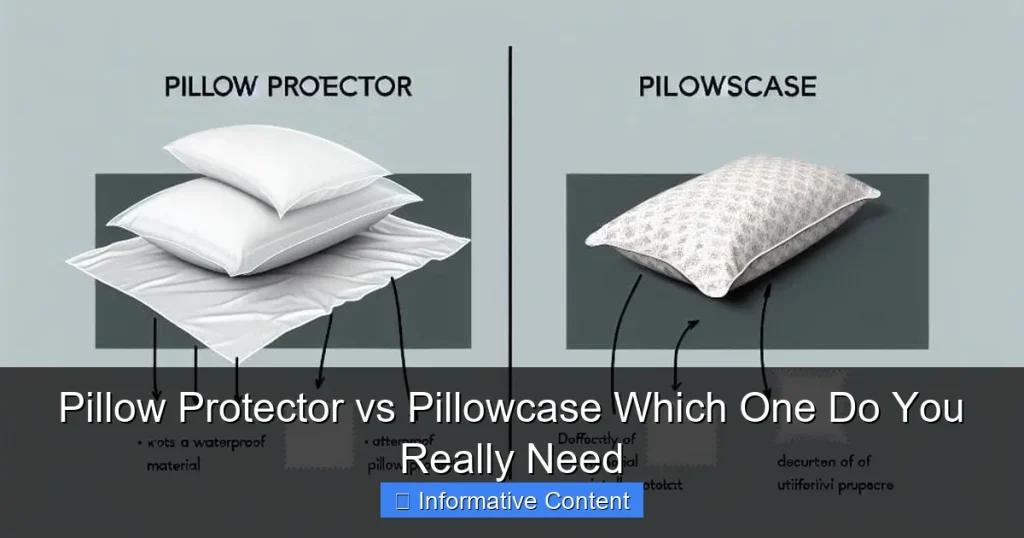
Choosing between a pillow protector and a pillowcase can be confusing, but both play unique roles in keeping your sleep space clean and comfortable. A pillowcase is the soft, decorative layer you sleep on, while a pillow protector is a hidden barrier that shields your pillow from sweat, allergens, and stains. Understanding the difference helps you decide what your bed truly needs.
Key Takeaways
- Pillowcases are for comfort and style: They provide a soft surface for your skin and add a decorative touch to your bedding.
- Pillow protectors are for protection: They act as a barrier against moisture, dust mites, and allergens, extending the life of your pillow.
- Both can be used together: For the best hygiene and comfort, using a pillow protector under your pillowcase is the ideal combination.
- Material matters: Pillowcases come in cotton, silk, and linen, while protectors are often made from tightly woven or waterproof fabrics.
- Health benefits are significant: Protectors are crucial for allergy sufferers, while the right pillowcase can benefit your skin and hair.
- Maintenance differs: Pillowcases should be washed weekly, while protectors can be washed less frequently, usually every few weeks.
- Cost is a factor: Pillow protectors are a small investment that can save you money by preserving your pillows longer.
Quick Answers to Common Questions
What goes on the pillow first, the protector or the pillowcase?
The pillow protector always goes on first, directly onto the pillow. The pillowcase is then placed over the protector.
How often should I wash my pillow protector?
It’s generally recommended to wash your pillow protector every two to four weeks, or more frequently if it becomes visibly soiled.
Can a pillow protector help with allergies?
Yes! A high-quality pillow protector creates a physical barrier that prevents dust mites and their waste from penetrating your pillow, which is a major benefit for allergy and asthma sufferers.
Do I still need a pillowcase if I use a protector?
Yes, you do. A pillow protector is not designed for comfort against your skin. A pillowcase provides the soft, breathable surface you need for a good night’s sleep.
Are waterproof pillow protectors uncomfortable?
Modern waterproof protecters are made with thin, breathable membranes that are not noticeable under a pillowcase. You get the protection without the plastic-y feel.
📑 Table of Contents
Pillow Protector vs Pillowcase: Which One Do You Really Need?
We spend a third of our lives with our faces pressed against a pillow. It’s a thought that makes you want to ensure your sleep setup is as clean and healthy as possible. But when you’re shopping for bedding, you’re faced with a choice: pillow protector vs pillowcase. Are they the same thing? Do you need one, the other, or both?
The truth is, they serve different but complementary purposes. Think of it like your phone. A pillowcase is like a stylish phone case that looks good and feels nice. A pillow protector is the essential, invisible screen protector that keeps the real damage from happening. Understanding this difference is the first step to a cleaner, more comfortable, and healthier night’s sleep.
What Exactly is a Pillowcase?
A pillowcase is the removable fabric cover that you see and feel on your bed. It’s the final layer of your bedding, the one that touches your skin and hair all night long. Its primary jobs are comfort and aesthetics.
The Role of a Pillowcase
Pillowcases are all about the sleep experience. They provide a soft, smooth surface that feels good against your cheek. They also come in a huge variety of colors, patterns, and materials, allowing you to match your bedroom decor perfectly. When you think of making your bed, the pillowcase is the star of the show.
Common Materials for Pillowcases
The material of your pillowcase can make a big difference.
- Cotton: The most popular choice. It’s breathable, durable, and easy to care for. For a luxurious feel, look for high-thread-count Egyptian or Pima cotton.
- Silk: A favorite for beauty sleep. Silk creates less friction, which can help prevent wrinkles and reduce hair frizz and breakage.
- Linen: Known for its incredible breathability and a relaxed, textured look. It gets softer with every wash.
- Bamboo: A sustainable option that is naturally hypoallergenic, moisture-wicking, and incredibly soft.
What Exactly is a Pillow Protector?
A pillow protector is an often-overlooked layer of bedding that goes on the pillow first, underneath the pillowcase. You don’t really see it, but its job is critical. It’s a functional barrier designed to keep your pillow clean from the inside out.
The Role of a Pillow Protector
While a pillowcase can be easily removed and washed, your pillow itself is much harder to clean. A pillow protector acts as a shield, preventing sweat, body oils, saliva, and dead skin cells from soaking into the pillow filling. This not only keeps the pillow hygienic but also significantly extends its lifespan. For a deeper dive into their purpose, you can learn more about what a pillow protector is and why it’s a sleep essential.
Common Materials for Pillow Protectors
Protectors are made from fabrics that prioritize function over feel.
- Tightly Woven Cotton or Polyester: These create a physical barrier that is impervious to dust mites and other allergens, while still being breathable.
- Waterproof or Water-Resistant Fabrics: Often made with a thin membrane like polyurethane, these are perfect for children’s beds, or for anyone who wants to guard against spills and heavy sweating.
The Core Differences: A Side-by-Side Comparison
So, when we talk about pillow protector vs pillowcase, what are the real, practical differences? Let’s break it down.
1. Primary Function
The most important difference is their job. A pillowcase is for you – it’s about your comfort and the look of your bed. A pillow protector is for the pillow – it’s about protection and hygiene. One is a luxury, the other is a necessity.
2. Position on the Pillow
This is simple. The pillow protector goes directly onto the pillow first. Then, you slip the pillowcase over the protector. The protector is the hidden layer; the pillowcase is the visible one.
3. Maintenance and Cleaning
You should wash your pillowcase at least once a week, just like your sheets, to remove the buildup of skin cells and oils. A pillow protector doesn’t need to be washed as frequently. Washing it every two to four weeks is usually sufficient, unless it becomes soiled.
Why You Might Need a Pillow Protector
Is a pillow protector really necessary? For most people, the answer is a resounding yes. Here’s why it’s a smart addition to your bedding.
Allergy and Asthma Relief
Dust mites are microscopic creatures that thrive in warm, humid environments like your pillow. They are a major trigger for allergies and asthma. A high-quality pillow protector with a tight weave creates a barrier that keeps dust mites from colonizing your pillow, making a real difference for your health. This is one of the key reasons experts recommend them.
Protecting Your Investment
Good pillows, especially memory foam pillows, can be expensive. A pillow protector is a small price to pay to keep that investment safe. It prevents sweat and oils from breaking down the foam or filling, which can cause it to become lumpy and lose its support much faster.
Keeping Things Fresh
Let’s be honest, we all sweat at night. That moisture can seep into your pillow and create a breeding ground for bacteria and mold, leading to unpleasant odors. A protector, especially a waterproof one, keeps that moisture out, ensuring your pillow stays fresh and clean for much longer.
Why the Right Pillowcase is Also Important
While the protector does the heavy lifting for hygiene, your pillowcase is crucial for your personal comfort and even your appearance.
Skin and Hair Health
A cotton pillowcase can absorb moisture from your skin and hair, potentially leading to dryness and irritation. It can also create friction that contributes to wrinkles and bed-head. Switching to a silk or satin pillowcase can help mitigate these issues, allowing your skin and hair to glide smoothly across the surface.
Personal Comfort
The feel of your pillowcase against your skin is a major factor in how well you sleep. Some people love the crisp feel of percale cotton, while others prefer the softness of sateen or the cool touch of bamboo. Choosing a material you love makes bedtime something to look forward to.
The Final Verdict: Do You Need Both?
So, after breaking down the pillow protector vs pillowcase debate, what’s the final answer? The best approach for a clean, healthy, and comfortable sleep is to use both.
Think of it as a system. The pillow protector is the unsung hero, working silently to protect your pillow from the inside. The pillowcase is the star, providing the comfort and style you interact with every night. By using them together, you get the best of both worlds: a pillow that lasts longer and a sleep surface that feels amazing.
Start by choosing a breathable, allergen-proof pillow protector that fits your pillow snugly. Then, pick a pillowcase in a material and color that you love. This simple two-layer system is the secret to a truly restful and hygienic night’s sleep.
Frequently Asked Questions
What is the main difference between a pillow protector and a pillowcase?
The main difference is their function. A pillowcase is a decorative and comfortable cover you sleep on, while a pillow protector is a functional barrier that goes underneath to shield the pillow from moisture, allergens, and stains.
Can I use a pillow without a pillowcase?
While you can, it’s not recommended. Without a pillowcase, your pillow will quickly become dirty from skin oils, sweat, and saliva, and it will be much harder to keep clean and hygienic.
Do pillow protectors make noise?
Older or low-quality waterproof protectors might crinkle, but most modern protectors are made from quiet, soft fabrics that make no noise at all during the night.
How do I choose the right size pillow protector?
You should choose a protector that matches the size of your pillow (e.g., Standard, Queen, King). A snug fit is important to ensure the protector stays in place and provides full coverage.
Will a pillow protector change the feel of my pillow?
A good quality, breathable pillow protector should have a minimal impact on the feel of your pillow, especially once you put your soft pillowcase over it.
Are pillow protectors worth the money?
Absolutely. They are a small investment that can significantly extend the life of your pillows, which are much more expensive to replace. They also provide important health benefits by creating a cleaner sleep environment.